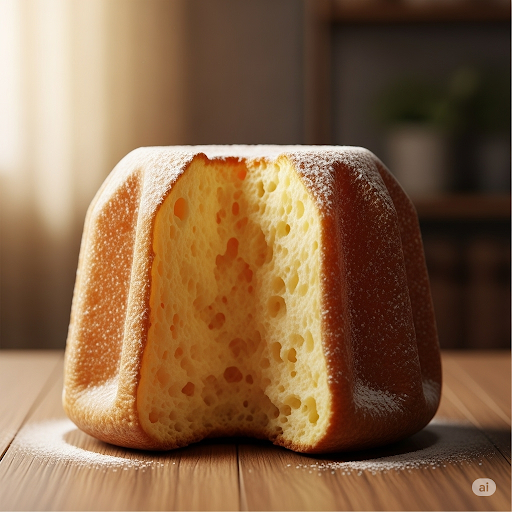
Pandoro, the undisputed symbol of Italian Christmas holidays, hides behind its elegant shape and buttery texture a set of refined techniques that only a true artisan knows thoroughly. The secret lies not only in the recipe, but especially in the artisanal process, made of patience, precise attention and calibrated steps.
The right butter:
Choosing the type of butter is essential to achieve all the softness and characteristic aroma of pandoro. The best is fresh centrifuge butter, preferably of Italian origin, because it offers a balanced water content and a more intense aroma. It’s important to add it cold to the dough, little by little, to promote proper distribution in the gluten mesh, without overheating the mass. This step makes the pandoro particularly soft and with a uniform structure.
“Veil” processing:
One of the most delicate steps is the partial lamination of the dough, called “veil processing”. This consists of incorporating air and butter creating thin layers that overlap, giving the pandoro its characteristic soft and almost “laminated” texture. It’s essential to avoid kneading too vigorously or too long: the dough must remain soft, elastic and slightly sticky. After this phase, follows a mandatory resting period, which allows the gluten to relax and the ferments to develop complex aromas, essential for regular rising and full flavor.
Slow and controlled rising:
Pandoro requires long rising times at controlled temperature, often in multiple phases, to allow the sourdough starter — or baker’s yeast in minimal doses — to ferment slowly, developing fragrant aromas and a soft but compact texture. Rising too quickly risks compromising the texture and shelf life of the final product.
Baking and cooling:
Baking is another critical moment: the pandoro should be removed from the oven as soon as it reaches a beautiful golden color, a sign that the crust has formed without burning the delicate sugars on the surface. Immediately after baking, turn the cake upside down and let it cool suspended head down on special supports, to prevent the weight of the pandoro itself from compromising its iconic star shape and preventing collapse. This step also helps maintain perfect internal softness, with an airy but resistant structure.
Pastry chef’s tip:
To enrich the aromatic profile of pandoro, a trick is to add real vanilla bean to the dough — not extract or synthetic flavoring — and fresh grated orange zest. These natural ingredients give a warm and enveloping fragrance, enhancing the sweetness without covering it. Some pastry chefs also love to experiment with light touches of acacia honey or quality rum extracts, always dosed with measure.
These techniques, put together, tell the story of passion and artisanal wisdom that transform a simple dough into a masterpiece of softness and taste, capable of giving unique emotions every year on holiday tables.