
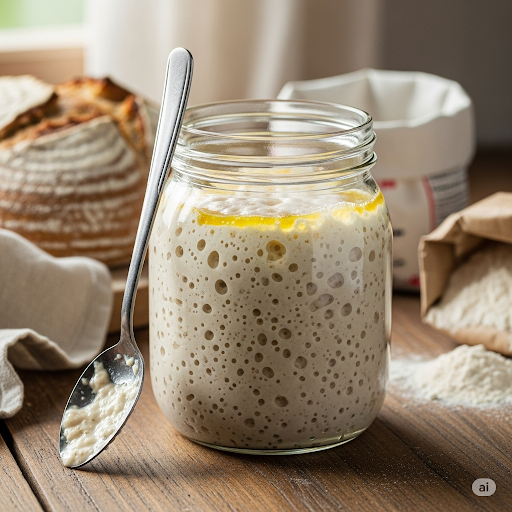
Sourdough, also known as natural yeast or starter, is a living mixture of flour and water, created through the spontaneous fermentation of lactic acid bacteria and wild yeasts present in the environment. This process gives bread unique characteristics: an intense aroma, a soft crumb, and a slightly tangy flavor that delights every palate.
Origins and Tradition
The history of sourdough is lost in the mists of time: it was already used in ancient Egypt to ferment bread, and its use has been passed down for millennia, crossing various Mediterranean and European cultures. For centuries, each family kept its own “mother,” renewing and passing it down from generation to generation—a true cultural and gastronomic heritage.
How to Create and Maintain It
Preparing sourdough requires only flour and water. The dough is left to ferment, allowing natural microorganisms to do their work. To keep it “alive” and active, it must be regularly “refreshed”: new flour and water are added consistently and attentively. There are various regional styles—for example, Piedmontese and Milanese sourdough—that differ in proportions and preservation methods.
Use in Baking and Pastry
Sourdough is the queen of artisanal baking: bread, focaccia, pizzas, breadsticks, and even large festive leavened products like panettone, pandoro, and colomba come to life thanks to this natural yeast. Besides leavening the dough, sourdough imparts complex aromas and superior shelf life to the finished product.
Health Benefits
The slow fermentation of sourdough offers several advantages:
-
Greater digestibility: Naturally leavened bread is lighter and more digestible thanks to microorganisms that pre-digest some of the starches and proteins.
-
Lower glycemic index: Bread made with sourdough raises blood sugar less rapidly than industrial bread, helping to prevent blood sugar spikes.
-
Increased nutritional bioavailability: Improves the absorption of essential minerals like calcium, iron, zinc, and magnesium, and provides B vitamins and antioxidants.
-
More flavor and shelf life: Gives products an airy structure and longer shelf life because the acids produced during fermentation inhibit mold growth.
A Return to Craftsmanship
Using sourdough is a return to a slower and more mindful way of making bread and sweets, a gesture that embodies respect for raw materials and traditions. Its preparation requires patience but yields genuine, nutritious products rich in history.
In summary, sourdough is not just an ingredient but a true “beating heart” of artisanal cooking and daily health, symbolizing an ancient, healthy, and passionate way of nourishing oneself.